You've reflected, explored, maybe even been in therapy. You know your story. You can name the patterns, connect the dots, and make sense of how you got here.
And yet, when life gets hard, you still find yourself caught in familiar loops. That's not a failure, it's a missing piece. Insight can take us far, but it doesn't always change how it feels to be you.
Somatic psychotherapy brings the body into the conversation, helping insight become something you can actually live.
You understand yourself.
So why doesn't it
feel different
yet?
Danielle Wiggins, Somatic Psychotherapist and Practitioner
I’ve been there
For a long time, I believed that if I could just understand things deeply enough, everything would eventually fall into place. I spent years reflecting, analyzing, and trying to make sense of my experiences. Like many of the thoughtful, perceptive people I now work with, I thought insight would naturally lead to change. Over time, I kept noticing the same thing: when life felt manageable, understanding seemed enough.
When grief arrived. When relationships got complicated. When my body needed something from me. When life stopped cooperating with the plan, that's where the gap appeared. I could explain what was happening, but explanation is not the same thing as living through it. Again and again, I found myself returning to the same realization: insight can take us far, but it doesn't always reach the body.
What began to change things wasn't finding a better explanation. It was learning how to slow down, listen differently, and include the body in the process. When attention moves toward sensation, pacing, expression, and the nervous system's natural rhythms, insight can begin to translate into something lived.
What if the missing piece isn't more
understanding?
Many of the people I work with are already thoughtful, insightful, and deeply self-aware. They can name their patterns and often understand exactly why they're there.
And yet, when life gets difficult, they still find themselves pulled into familiar ways of coping. What they're looking for isn't necessarily another explanation. They're looking for a way to feel more connected to their own aliveness.
Maybe you can relate.
HERE'S WHAT I BELIEVE:
Understanding yourself is powerful. Integration happens when the body, mind, and emotional life come back into
relationship.
It’s possible to feel more present, responsive, and at home in yourself when you have space, support, and a way of working that honors the body’s pace and intelligence.
My purpose through Space Takes Practice is to help thoughtful, perceptive people translate insight into lived, embodied experience so they can move through life with greater presence, self-trust, and aliveness.
The body
reveals itself at its own pace
When we're constantly moving, producing, solving, or analyzing, it's easy to miss the quieter signals beneath the surface. Sensations. Emotions. Longings. Tension. Relief.
Often, these experiences aren't absent. They're simply waiting for enough space to be noticed. This work creates room for that noticing. Over time, what once felt confusing or disconnected can begin to make more sense through attention, pacing, and relationship.
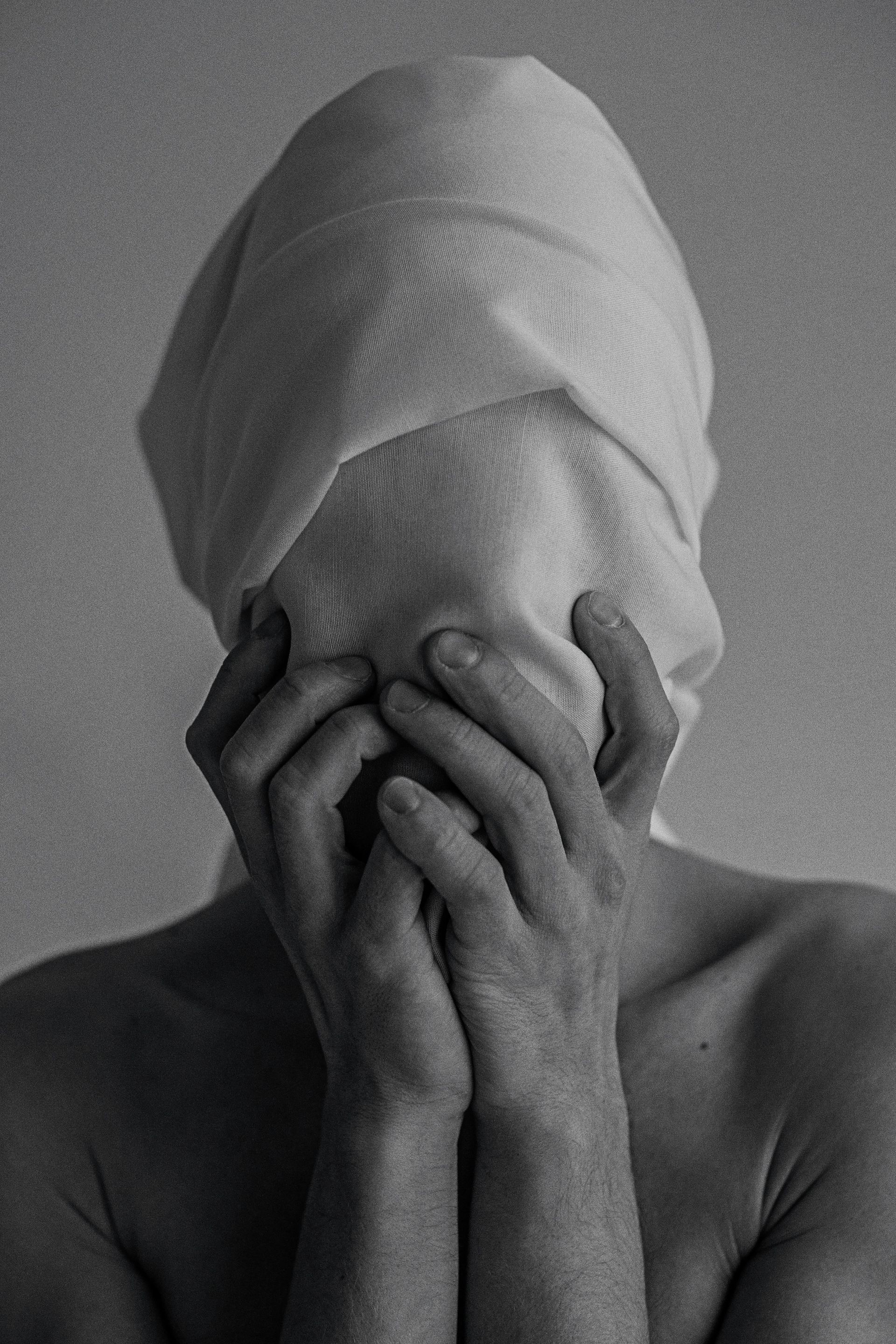
Healing isn’t about escaping pain — it’s about building capacity to
stay present
Pain, grief, tension, overwhelm, and vulnerability are part of being human. Rather than trying to bypass or immediately “fix” those experiences, this work creates space to move through them with support, pacing, and awareness.
Together, we practice noticing how your body responds, where tension lives, and what happens when you stop forcing yourself to move faster than your system can follow. Over time, this can create a deeper sense of presence, integration, and aliveness. The practice itself becomes a kind of medicine: learning to stay with yourself with greater care, curiosity, and capacity.
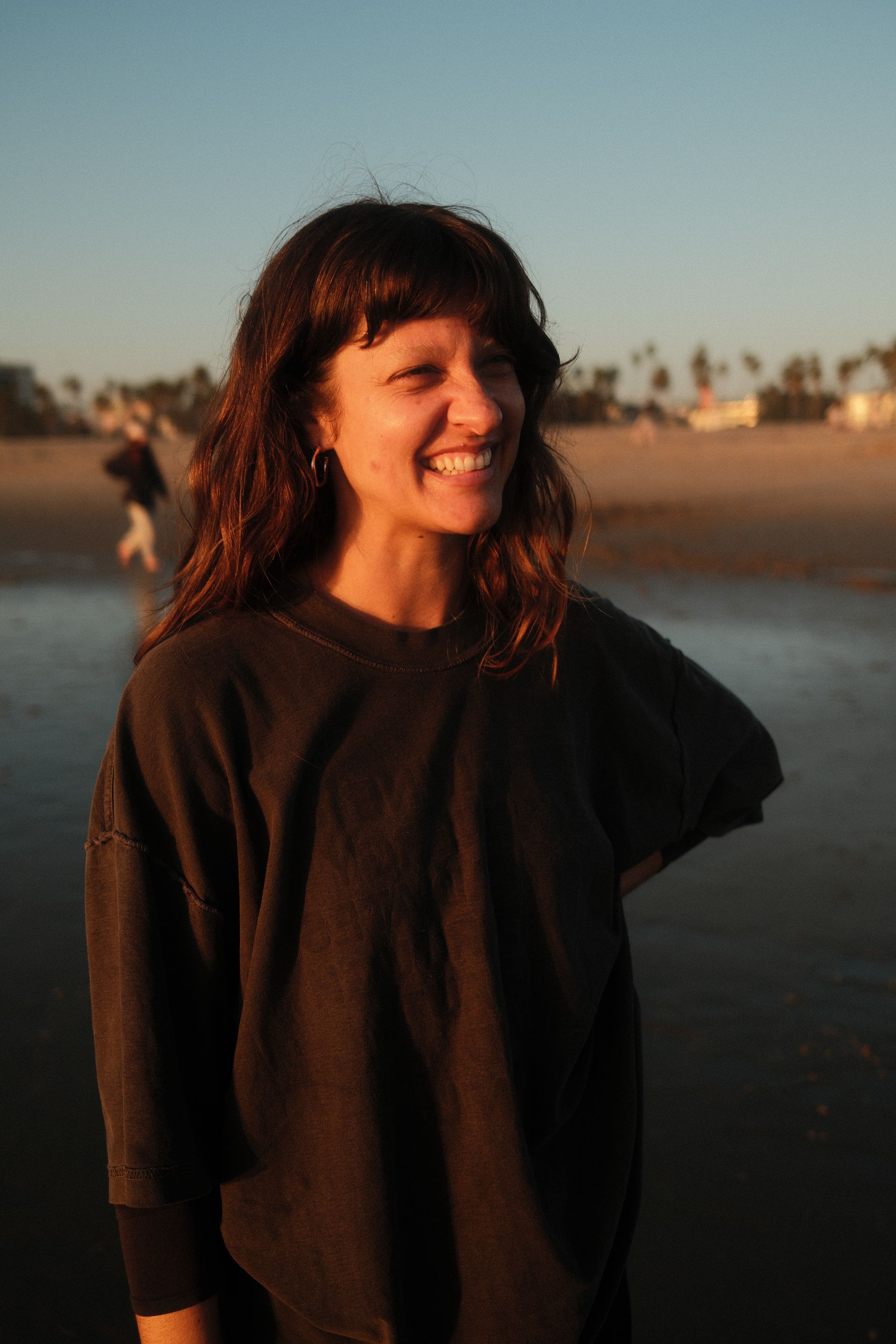
I’m Danielle Wiggins, a somatic psychotherapist
Founder of Space Takes Practice, an embodied psychotherapy practice based in Santa Monica, California.
I often work with thoughtful, self-aware adults who have spent years trying to understand themselves through therapy, reflection, creativity, or personal exploration, and still find that their bodies carry tension, overwhelm, or patterns that insight alone hasn't shifted.
My approach integrates somatic psychotherapy, trauma-informed care, and contemplative and creative practice, while drawing from existential and depth-oriented perspectives to support deeper integration across body, mind, and emotional life. Rather than pushing toward quick solutions or constant calm, our work focuses on building the capacity to stay present with what is real, allowing new patterns, expression, and agency to emerge over time.
Many of the people who find their way to this work are navigating periods of profound transition. Sometimes that looks like complex grief, chronic illness, burnout, relationship changes, creative blocks, or questions of identity and purpose.
It can feel as though they are in the middle of an internal reorganization. The old map no longer fits, but the new one hasn't fully emerged. Through our work together, clients often begin to experience greater self-trust, a deeper relationship with their bodies, and a renewed sense of aliveness in their daily lives.
For a long time, I waited inside of my own experience, assuming that eventually, things would finally just shift, or that someone would come
show me the way
Then, life unfolded in the way it often does. Estrangement. Addiction. Betrayal. Grief. Chronic illness. Major transitions. The raw material of my own existence. The kind of experiences that couldn't be solved, analyzed, outworked, or outrun. The strategies that had carried me for years eventually brought me to their edge. Each one invited me into a relationship with uncertainty that I hadn't chosen, but ultimately learned to be in relationship with. What emerged wasn't a better explanation. It was a different relationship with my inner world. Movement. Stillness. Honesty. Presence. Practice. A growing capacity to stay with what was happening, even when I didn't know where it was leading. And that changed everything.
The Philosophy Behind This Practice
Core belief
Coming home to yourself isn't an endpoint, it's a practice. At the heart of this work is a belief that you already carry wisdom, insight, and the capacity to know yourself deeply. Often, what’s missing isn’t information. It’s a supportive relationship that helps you listen, trust what you find, and stay connected to your experience long enough for change to emerge.
This work is about developing that relationship. It honors complexity, welcomes contradiction, and makes room for whatever is alive in you. Together, we cultivate the capacity to listen, respond, and move through life from a place that feels more honest, embodied, and your own.
Developing listening capacity
It's like learning a new language of listening inwardly —attending to sensation, emotion, pattern, impulse, and meaning without immediately needing to fix or explain them. With practice, this creates more room to respond from curiosity.
Three streams of knowing
Three streams of knowing are foundational to the practice; body (physical), heart (emotional), mind (imaginative). Each holds distinct information. When we bring them into conversation through movement, image, metaphor, breath, and language, we gain access to a fuller picture of our experience and a broader range of choices in how we respond.
How the work takes shape
We weave together somatic therapy, movement, imagination, metaphor, breath, visual art, poetry, and reflection as pathways into experience. These forms help sensation become language, impulse become shape, and insight become lived practice. The pace may be soft and slow or more immediate and expressive, always responsive to capacity.
Ritual gives attention a shape and rhythm. It may involve repetition, marking a beginning or ending, or creating a container we can return to while allowing each encounter to be different. There is often an intention, but not a predetermined outcome: a chosen way of meeting mystery, transition, grief, or the unknown.
Over time, what emerges in session can ripple outward into daily life, relationships, creativity, and the ways you stay present with yourself.
Beyond either/or
Much of our suffering comes from believing we should only live in one half of an experience. Strong, not vulnerable. Productive but not resting. Certain, not questioning. Independent but not needing support.
Foundational concepts from Traditional Chinese Medicine, such as yin/yang and polarity, help us understand these tensions. Darkness and light, contraction and expansion, movement and stillness are not problems to solve, but natural rhythms of being alive. Each depends on the other, and each contains the possibility of its opposite.
Together, we explore how these dynamics show up in your life and practice moving between them with greater flexibility. When we are no longer fighting one side of ourselves, more choice, aliveness, and possibility become available.
Softness ≠ weakness
You may have been taught to push harder, but something in you is realizing that it’s no longer possible or that your entire being is starting to reject that belief. Softening isn’t surrender to passivity, though, either. It is a skill. Safety is built as capacity grows: we learn to stay connected to more of our experience without becoming overwhelmed by it. That capacity makes boundaries clearer and expression wiser, more authentic, more you.
What this practice asks of you
- Notice: you can start to listen to yourself and be present to what’s here.
- Stay: practice staying with your experience long enough to learn from it.
- Choose: with increased capacity, you get to choose how you move, speak, and act.
- Foundationally as well as throughout practice, we continue to ask: How do I want my life to feel? That question guides the practice more than chasing a temporary state.
What informs my practice
My work is shaped by a long history of movement, ritual, and contemplative practice, and by personal experiences of caregiving, estrangement, grief and chronic illness. Those seasons taught me pacing, boundaries, and radical curiosity as well as the difference between knowing something and inhabiting it. This shapes how I show up in the room.
Roots & teachers
I honor the cultural and ancestral lineages that have long understood healing through the body, movement, rhythm, ritual, relationship, and communal gathering. Much of what is now called somatic work in the West echoes wisdom held for generations within Indigenous traditions and collective practices of grieving, expressing, and restoring connection. I engage these influences with humility, respect, and care.
Rooted in somatic practice, my work has been shaped by teachers, practitioners and influences such as Daria Halprin, Bonnie Bainbridge Cohen, Manuela Mischke Reeds, Dr. Rosario Sammartino, Peter Levine, and Resmaa Menakem, alongside contemplative guides Pema Chödrön, Chögyam Trungpa, Adyashanti and Thích Nhất Hạnh. I also draw on depth‑oriented and imaginal influences from Joan Chodorow and Marion Woodman. I attend to how culture, gender, and social conditioning live in the body, shaping how we move, express, and relate, and what becomes possible when those patterns begin to shift.
I study philosophical, existential, and contemplative threads—questions of meaning, presence, impermanence, and embodiment, and continue to learn from nature as one of my steadiest teachers. I don’t subscribe to any single belief system or denomination; I engage these forms with openness and discernment.
In addition, I draw on body‑centered frameworks such as Traditional Chinese Medicine to inform how energy and pattern show up in the body – how qi moves or feels stagnant, and how yin/yang dynamics shape posture, tone, and feeling. That perspective helps me notice texture, movement, and relational shifts that aren’t obvious in words alone.
Selected Training
Trauma & Clinical Modalities
* Somatic Experiencing
* Somatic Attachment Therapy
* EMDR Intensive Training
* Ketamine-Assisted Psychotherapy (KAP) Training
* Certified Religious Trauma Specialist, with advanced training in trauma, complex trauma, and trauma-informed care under Dr. Quincee Gideon
* Inference-Based Cognitive Behavioral Therapy (I-CBT)
* Exposure Response Prevention (ERP)
Movement, Expressive Arts & Somatic Practice
* Movement-based expressive arts, including Year 1 of the Tamalpa Life/Art Process®
* Laban/Bartenieff Fundamentals
* Somatic Movement & Creative Dance Certificate
* Elemental Earth Body Study with Dohee Lee
* Over a decade of personal meditation practice and facilitating contemplative and movement-based group experiences
Grief, Ritual & Embodied Traditions
* Grieving Ourselves Whole: Ancestral Medicine
* Ecological Grief Training with Dr. Kriss Kevorkian
* Traditional Chinese Medicine Foundations
* Reiki Master
* Meditation, breathwork, and multiple 200-hour yoga teacher trainings
Currently in Training / Ongoing Study
* Tamalpa Life/Art Process® Practitioner training
* Registered Somatic Movement Therapist (RSMT) training
* Chinese Medicine Practitioner training
* Ongoing study in Body-Mind Centering®
What to expect
This is deep, relational, and sometimes challenging work. Expect invitations to notice patterns, impulses, ways of relating, and what happens inside of you and around you. We'll explore through small experiments, always guided by capacity and consent. We’ll attend to felt sense and the stories around it, and slowly weave new patterns of presence into daily life.
If this resonates, and if you feel called to explore this practice, there are gentle ways to begin: a free consult, an introductory session, movement classes, Reiki, or a supported group. I’m glad you’re here — these practices are worth returning to.
In my work with clients
I often see a similar shift begin to
unfold over time.
People who once felt stuck in cycles of overthinking, tension, or emotional overwhelm begin to experience more space inside themselves. They learn how to listen to their bodies, trust their own signals, and move through life with greater presence and self-agency.
Many clients tell me that what changes most isn’t just how they think about their lives — it’s how they feel in their bodies day to day. There’s more room for breath, creativity, honesty, and expression.
When I’m not in the therapy room, you’ll usually find me near the ocean, moving my body in some way, writing, or exploring the small rituals that help me stay connected to my own rhythms of life.

Testimonials
“As a survivor of severe childhood trauma, I carry much inside, often feeling confused, fractured, and ashamed. I once asked Danielle if I would ever be whole. She steadily and sagely helped me understand that I am whole. Working with Danielle is helping me reclaim my identity and build a life for myself. Since starting our work, I have much more capacity to feel all of my feelings, including anger, which used to completely overpower me. I am better able to see myself fully, acknowledge my needs and wants, and show up for myself in my relationships, family, and work in a way I wasn’t able to before.”
Client
“Danielle showed me how to work through what was happening in my body and that sitting with big feelings, thoughts, and sensations didn’t have to be shameful. It truly felt like she was holding a light up to the storm inside of me. The amount of safety I’ve gained in my body, relationships, and life from working with Danielle is unmatched. I had worked with countless providers in the past, but I was never able to go as deep or get to the root of things the way I have with Danielle.”
Client
“After experiencing a sudden and traumatic loss, I immediately began working with Danielle. She created an environment where I felt safe and brought deep knowledge of grief, trauma, and somatic practice. Through our work, I became more comfortable with all of my emotions, including pain and sadness. I feel empowered and more connected to myself than I have ever been.”
CLIENT

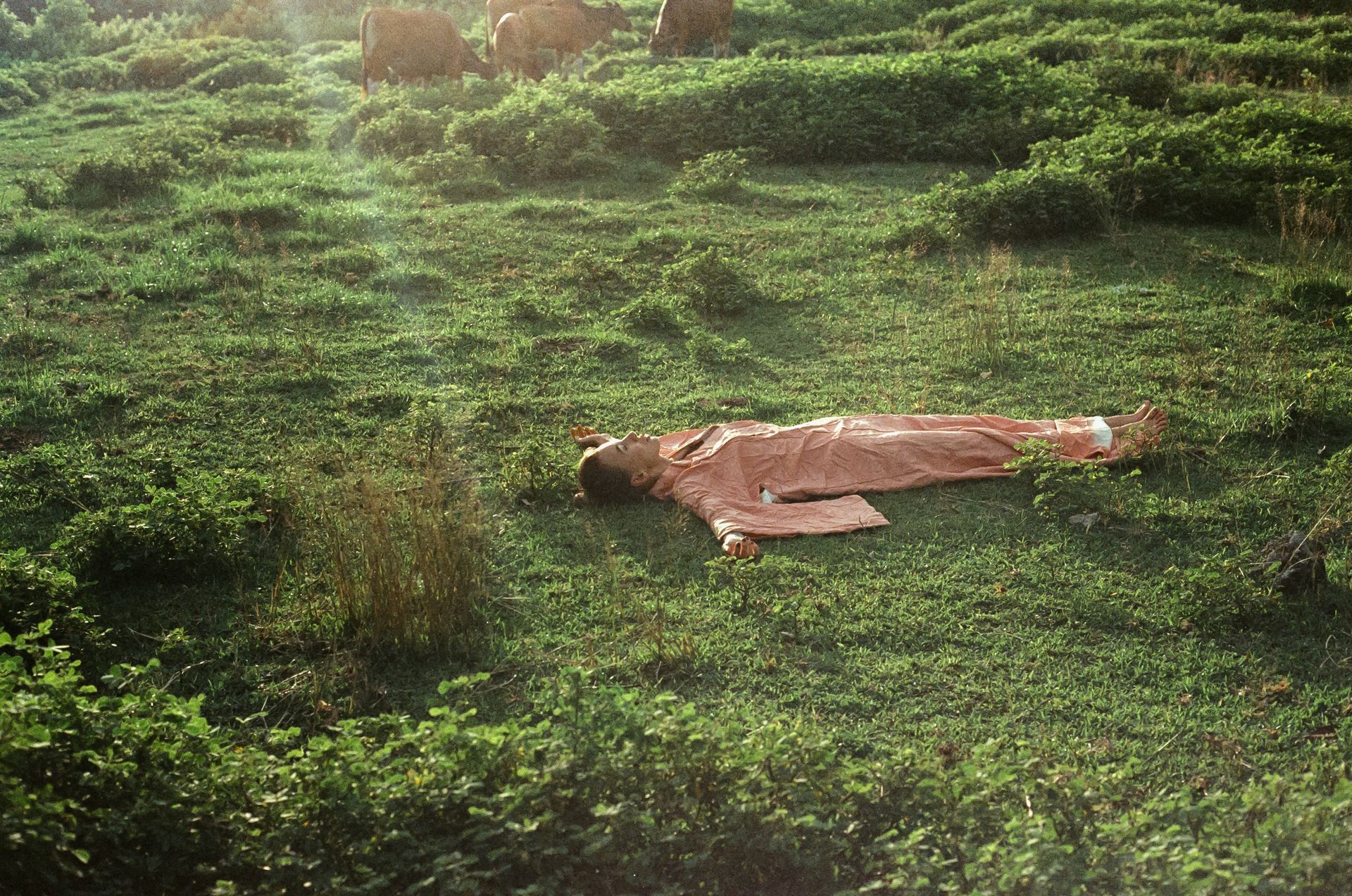
Let's create space for what's waiting to
emerge
If this resonates, I invite you to reach out and schedule a free consultation to see if this work feels like the right fit. You don't need to have it all figured out. We'll begin where you are and work from there.